What Makes A Brand Timeless, Not Dated
The brands that have been around for decades or longer aren’t necessarily the strongest. Discover what actually makes a brand feel dated and what timeless brands get right.

The world’s most recognizable brands have been around for generations.
Some feel as relevant today as they were at inception, while others feel like they’ve been left in the dust.
The difference between a legacy brand that’s timeless and one that’s dated all comes down to one thing: evolution.
But relevance doesn’t have to come at the cost of constantly reinventing yourself. Nor does it look like clinging so tightly to tradition that the brand stays frozen in time.
The strongest brands know what to protect and what to evolve.
Stagnation Is the Enemy
In last month’s Note, we explored how trust helps brands weather change. The strongest brands don’t stay relevant because they never evolve. They stay relevant because customers trust them enough to evolve alongside them.
That trust is earned by continuing to meet the expectations of today.
Heritage has value because it tells customers you’ve been here before. Experience creates confidence because you’ve solved problems over time. Reputation strengthens with every promise kept, every relationship built, and every customer who comes back again. And longevity is one of the few competitive advantages that can’t be manufactured overnight.
And still, none of those things are permanent.
Age is not the primary factor in whether a brand becomes dated. Instead, it becomes dated when its story, experience, or presence no longer reflects the business it has become or the customers it serves today.
Time is one of the greatest assets a brand can have. But like trust, it has to be earned continuously.
What Makes a Brand Feel Dated?
A brand doesn’t feel dated simply because it has been around for a long time or because its visual identity hasn’t changed recently. What really makes a brand feel dated is when customers sense that it has stopped moving forward.
Sometimes that starts with the story a company tells about itself, where every sentence leads with “Since 1978” or “Family-owned for three generations.” Those are meaningful facts, but they aren’t reasons to choose a business today. Heritage should establish credibility, then give way to the value that credibility creates for customers now.
Other times, it’s the experience. Maybe the website hasn’t changed in years, the photography no longer reflects the people or spaces customers encounter, or sales materials, social media, and messaging all feel like they’re speaking to a different era. None of these things have to chase trends, but together they signal whether a business is actively investing in how it’s perceived.
Perhaps the most common disconnect is this: the business has evolved, but the brand hasn’t.
Over the years, companies add services, enter new markets, hire exceptional talent, refine their processes, and adopt new technologies. Internally, they’re a completely different organization than they were a decade ago. Externally, customers still see the same story, the same positioning, and the same identity they’ve always known.
The result is a perception gap. The business keeps growing, while the brand stands still.
What Timeless Brands Get Right
Timeless brands understand an important distinction: not everything should change.
At the core of every enduring brand is an identity that remains consistent. Its purpose stays clear, values remain intact, the customer promise doesn’t shift with every new trend, and its personality feels familiar no matter where or when you encounter it.
Those elements become the anchor that allows the brand to evolve without losing itself. What changes is the expression:
- Messaging becomes more relevant
- Photography reflects their actual customers
- Digital experiences improve
- Content adapts to new channels
- Visual systems are refined, not reinvented
- The brand learns new ways to tell the same story
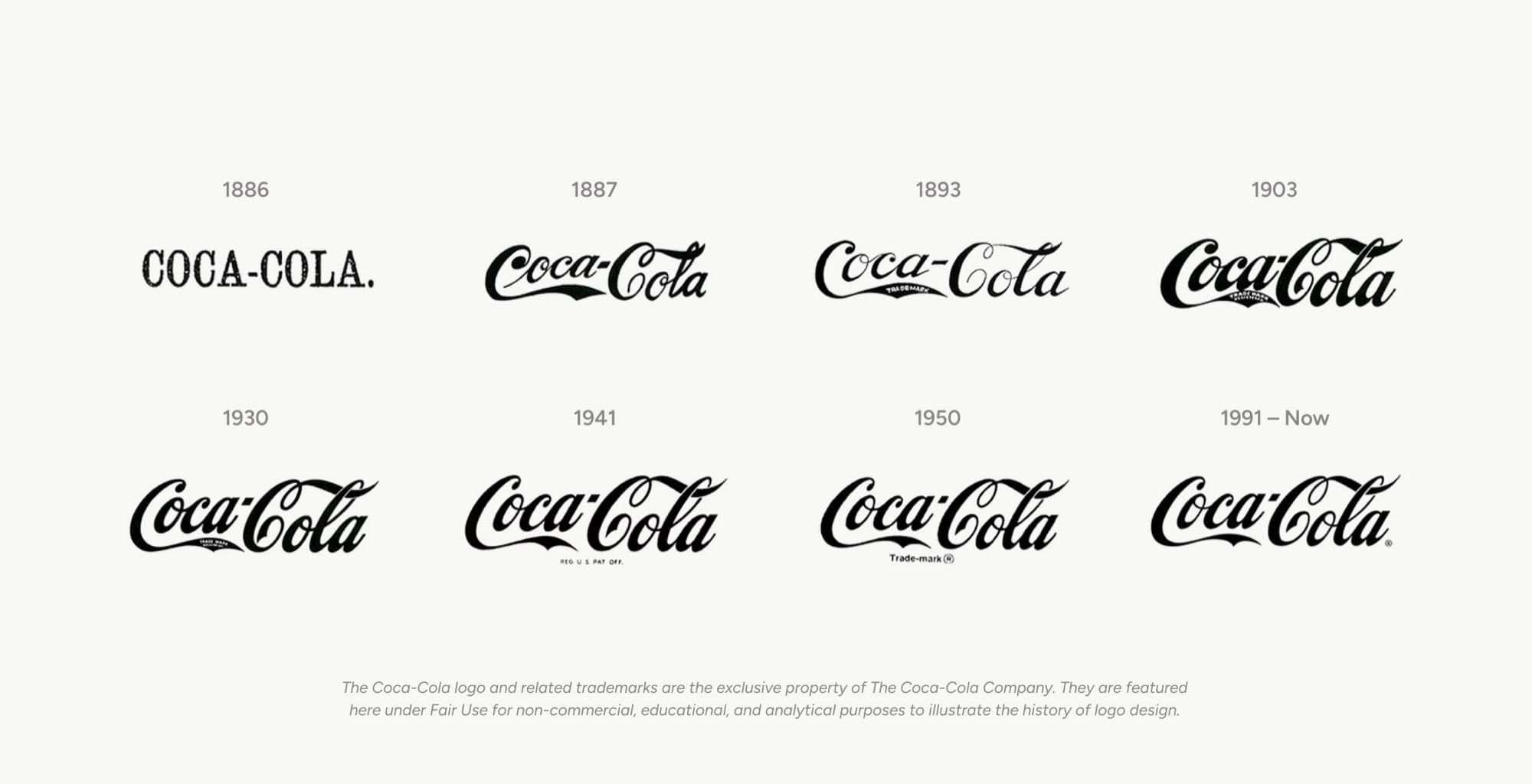
That’s why some of the world’s oldest brands still feel remarkably current. Take Coca-Cola. More than a century after its founding, the brand remains instantly recognizable not because it has resisted change, but because it has evolved with intention. Its visual identity has been refined over decades, most recently with a refreshed global design system, while preserving the distinctive assets that people associate with Coca-Cola around the world. The identity is consistent while the expression continues to evolve.
The same pattern appears across brands like Levi’s and Mercedes-Benz. They endure because they know which parts of their brand are foundational and which parts should evolve alongside culture, technology, and customer expectations.Trust is the cumulative asset that survives leadership and operational changes. No matter how your brand needs to evolve alongside the organization, trust is one thing that must remain.
Heritage Is Proof, Not the Product
For many legacy businesses, history becomes the headline.
You see it in the first sentence of the website, the opening line of the sales presentation, or the first thing someone says when asked about the company: “We’ve been doing this for 60 years.”
That’s an impressive achievement. But customers don’t choose a company simply because it has existed for 60 years.
Your history is the proof behind the message.
Take Rolex, for example. Customers don’t buy the craftsmanship because they’ve been around since 1905. They buy because over a century of experience has made Rolex exceptionally good at what they do.
Longevity only becomes meaningful when it demonstrates something that matters today: craftsmanship, expertise, innovation, consistency, relationships, or trust.
Relevance Over Newness
A timeless brand doesn’t pretend to be younger than it is. It doesn’t abandon its history in pursuit of the latest trend, nor does it expect yesterday’s marketing to carry tomorrow’s growth.
Instead, it continually translates who it has always been into language today’s customer immediately understands.
That’s the work of brand stewardship. Protecting what has always made the business valuable while ensuring that value is communicated in ways that feel current, credible, and compelling.
If your business has decades of experience behind it, your brand should make that feel like an advantage. The goal is to help customers recognize why your experience still matters.
Brands that stand the test of time are the ones that never stop evolving with purpose.

About the author
Laura Deleot, COO & Co-Founder
Laura Deleot is the Co-Founder, Chief Operating Officer and Executive Creative Director of Circa Brand Agency.
More about Laura →

Get the latest in brand news and brand development delivered straight to your inbox.
Related Notes