What Happens to Brand Equity During M&A?
Brand equity can live in places you might not expect, from reputation and relationships to people, culture, and capabilities. Understanding where that value lives is especially critical during a merger or acquisition.

When it comes to mergers and acquisitions, there is the buying and selling of the business.
Then comes the transformation for the next era of the organization.
For most M&A, the rollup brings businesses together on paper, but it’s brand strategy that helps determine what they become together.
It’s tempting to make assumptions on brand equity based on business valuation. The business with the most revenue clearly has the better brand… right?
Perhaps for some acquisitions, it’s a simple task. But there are some critical pieces of the puzzle is stopping first to consider:
- Brand Value: Where does existing brand equity live: the name, reputation, relationships, people, culture, capabilities, or something else?
- Brand Architecture: What could become stronger together and what needs to change? Where does the combination create an opportunity that neither business had on its own?
- Brand Opportunity: What can the combined business uniquely offer? What value does the new organization create that competitors can’t easily claim?
- Brand Scalability: How does the brand need to evolve as the business grows? What needs to be flexible enough to accommodate future acquisitions, capabilities, services, or markets?
The best brand strategy is rarely the most obvious one.
Preserving Brand Equity
Acquiring a business means taking on its revenue, operations, customers, and capabilities. Many of which are quantified and outlined throughout due diligence.
But much of what makes a business valuable doesn’t appear on a balance sheet: a strong reputation, longstanding customer relationships, trusted leadership, deep local roots, and a culture that keeps good people around.
In growth-oriented acquisitions, understanding the source of the brand’s equity is critical. What exactly are customers loyal to? Is it the name, the people, a particular service experience?
Longevity is not synonymous with equity, either. A brand could have existed for decades without having much to preserve, while another may have built great trust around a handful of people or capabilities.
Building the Brand Architecture
Every acquisition requires some level of integration. But that doesn’t mean erasing what made each business successful to begin with.
Sometimes that means keeping an acquired company’s name in certain markets. Other times it looks like quickly consolidating to a shared brand or moving to a DBA or endorsed structure to preserve local trust while connecting the business to a larger platform.
For example, in a referral-driven healthcare business, changing a familiar local name affects relationships very differently than it would for customers who choose primarily based on product, price, or convenience.
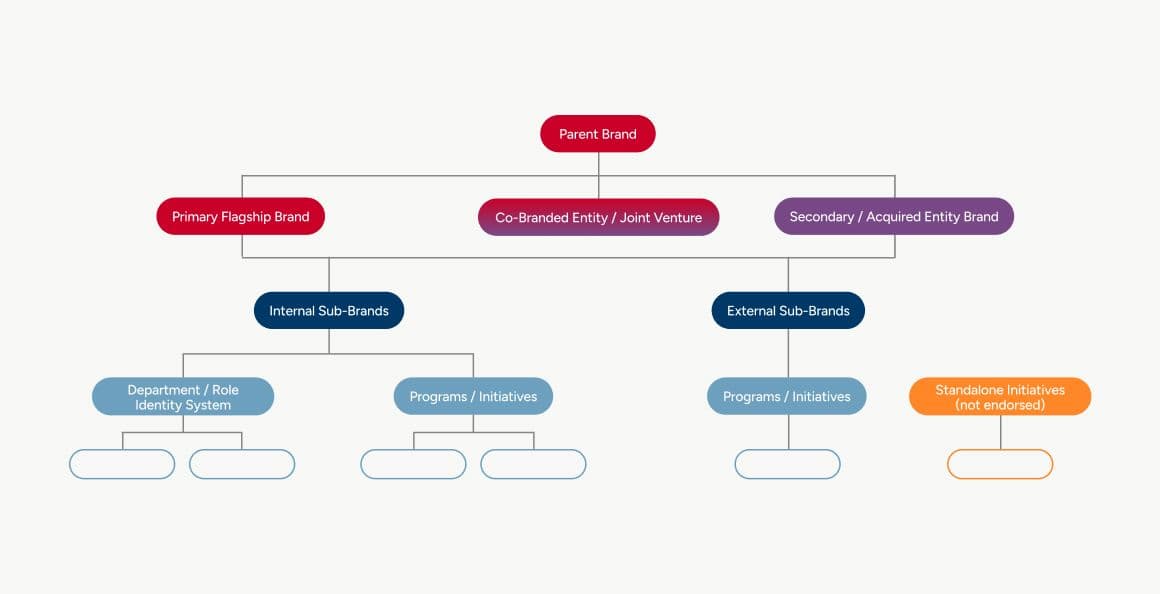
More than “What can we consolidate,” the real question becomes:
What should become consistent so the combined company can operate and grow effectively, and what needs to remain intact because it’s part of why this business works?
And that distinction goes further than the logo on the door. The strongest practice, process, capability, or even culture doesn’t always belong to the parent company. Integration requires being willing to recognize when something an acquired business does better should become part of the new standard. Brand architecture puts structure and hierarchy to the realization.
Discovering Brand Opportunity
The business case for an acquisition may be perfectly clear internally. Acquisition can mean more scale, greater efficiency, expanded geography, new capabilities, and a stronger talent base.
But the rationale that makes an acquisition compelling to investors isn’t necessarily the story that makes the combined company compelling to customers.
Customers need their own reason to care.
What can this business now deliver that the individual companies couldn’t on their own? Maybe it’s greater expertise across specialties, more resources without sacrificing local relationships, a broader geographic footprint, or a more seamless experience across services.
This is where brand positioning becomes part of the value-creation strategy. It’s not enough to communicate that several businesses have come together. The objective is to identify what the combination now makes possible and turn that into a differentiated value proposition the market can understand and the business can credibly deliver.
The vast majority of customers will never care that a company got “bigger.” That’s not much of a brand promise.
Getting better in a way that actually matters to the customer is.
Build for the Business You’re Becoming
For a growth platform, today’s acquisition may be one of many, which requires taking a much longer view.
Brand decisions can’t be based solely on the businesses sitting around the table today. From due diligence onward, leadership should also be thinking about the combined entity they’re building toward:
- What will need to remain flexible as new companies, capabilities, services, or markets are added?
- What should eventually become a platform-wide standard? And is it a standard from the parent company or the acquired company?
- What kind of reputation does the organization want to build beyond the reputations of the individual businesses it acquires?
Brand strategy creates a framework for those decisions instead of forcing the organization to reconsider its identity every single time the portfolio changes.
That doesn’t mean predicting exactly what the business will look like five acquisitions from now, either. It can simply look like creating enough clarity around what the platform stands for, how its brands relate, and where it’s headed that future growth has somewhere to fit.
If acquisition is part of the growth strategy, the brand needs room to grow, too.
Strategic Brands Create Value
Of course, brand won’t play the same role in every transaction. How much it matters depends on what’s being acquired, who the customer is, and how much reputation, relationships, and recognition influence their decisions.
For a consumer brand or relationship-driven service business, those factors may represent a significant part of what makes the company valuable. For a white-label business with little visibility to the end customer, they may matter much less.
But whenever reputation contributes in a meaningful way to the value of the business, brand deserves consideration as part of the transaction and integration strategy, not simply as something to clean up once the deal is done.
The opportunity goes beyond protecting the equity each acquired business brings with it to making that equity transferable and building on it.
Over time, trust that once belonged mostly to individual companies, markets, or relationships can begin creating value for the larger platform. New capabilities can strengthen its reputation. A clearer market position can make the whole organization more meaningful and differentiated. And each acquisition can contribute to something competitors can’t easily replicate.
Understand the brand equity so you can preserve what matters, lose what doesn’t, and make strategic choices for what comes next.

About the author
Tori Thomas, CEO & Co-Founder
Tori Thomas is the CEO and Co-Founder of Circa Brand Agency, where she helps organizations build brands designed to endure.
More about Tori →

Get the latest in brand news and brand development delivered straight to your inbox.
Related Notes